17 August 2026
Reviewed 17 August 2026
Which upholstery fabric survives a classic interior in daily use?
An abrasion figure on a sample tag answers a narrower question than buyers assume. What the number means, why two fabrics with the same count wear differently, and the four questions to ask before the cloth is cut.
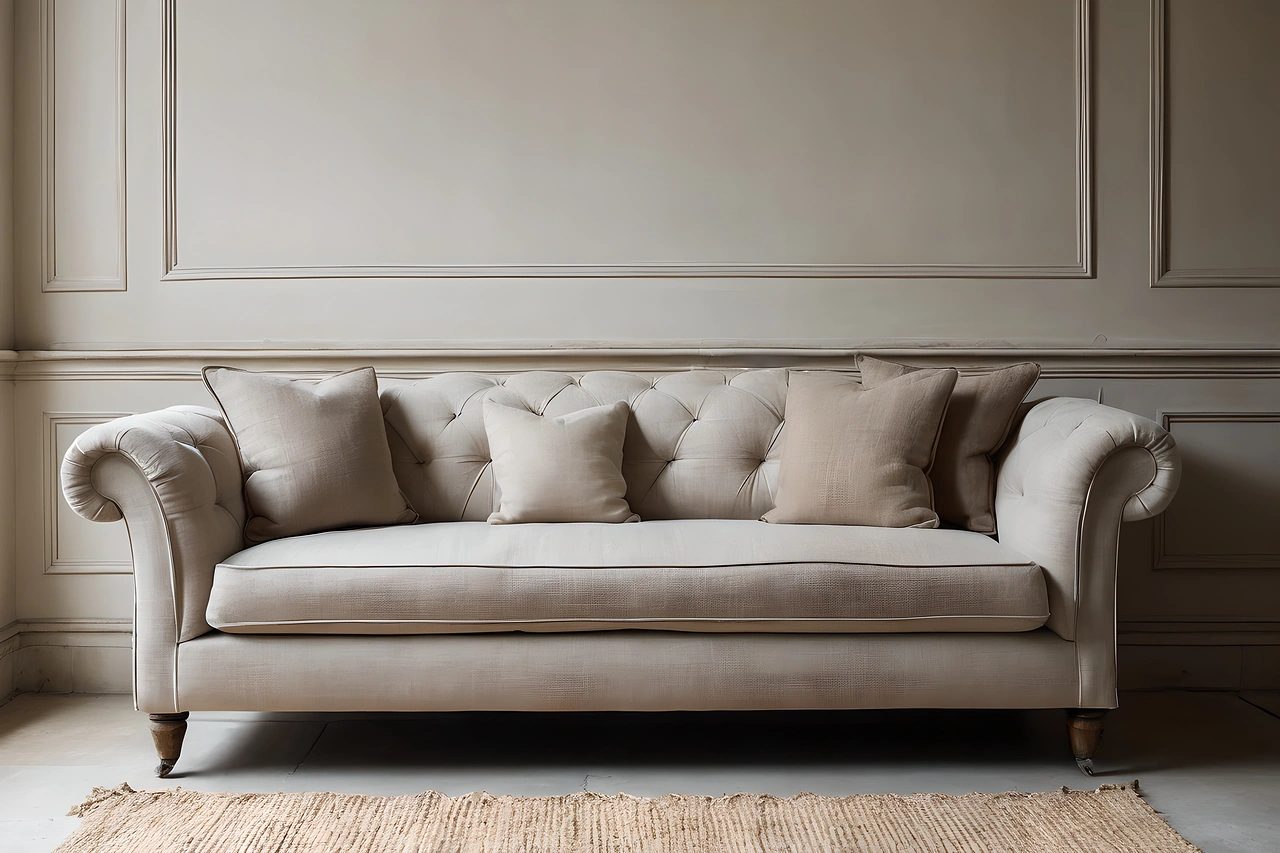
Classic interiors put pale, soft and often expensive cloth on the seats a household uses most, which is why upholstery choice decides how a room looks after two years rather than on the day it is photographed. Studios working in classic interior design, Modenese Interiors among them, specify cloth against use rather than against a swatch. The abrasion figure on a sample tag is the number most buyers rely on, and it answers a narrower question than it appears to answer.
What does a Martindale figure on a sample tag actually tell you?
An abrasion figure comes from a test that rubs a specimen against a standard abrasive along a figure of eight path and counts cycles until the specimen breaks down. The test runs in intervals, with the specimen removed and inspected between them, so the number recorded is the last count at which no breakdown had appeared.
The consequence matters when two samples are compared. A figure is the lower bound of the interval in which breakdown occurred, produced by rounding down rather than by measuring the point of failure. The relevant part of the standard is EN ISO 12947-2, which covers determination of specimen breakdown.
| What the figure is | What the figure is not |
|---|---|
| Cycles survived by a flat specimen against a flat abrasive | Service life of a seat in years |
| The last inspection count before breakdown appeared | The exact cycle at which the cloth failed |
| A comparison tool within one test method | A verdict on pilling, snagging or light fastness |
Two bands appear in almost every supplier catalogue: around 15,000 cycles separates decorative use from general domestic use, and 25,000 cycles and above is treated as heavy domestic use. Both bands come from market practice rather than from the text of the standard, so a band quoted without naming whose classification it follows carries no checkable content.
Why do two fabrics with the same rub count wear differently?
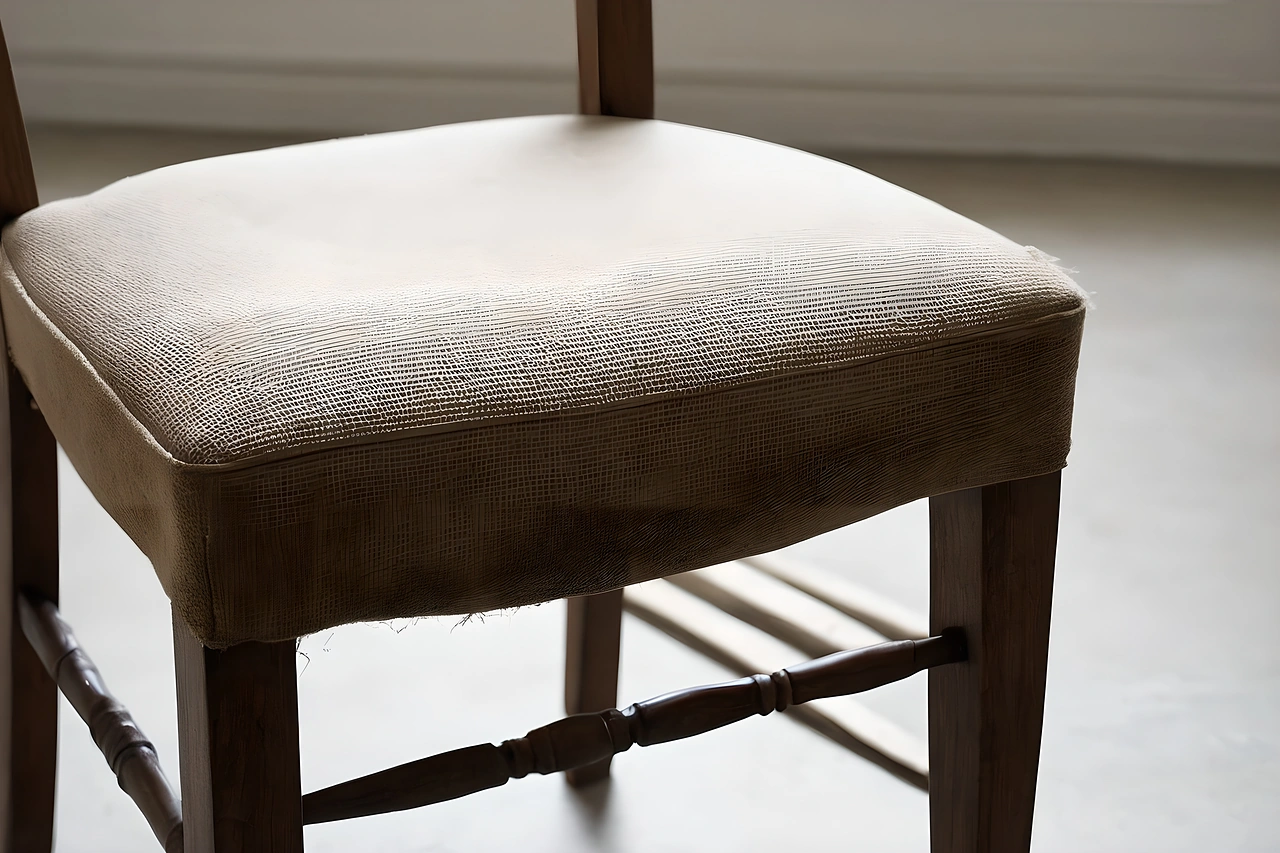
The test loads a flat plane, and a seat does not. Wear on a real piece concentrates along the front edge of a cushion, over the crest of an arm and around every seam, where the cloth is stretched over a radius and the load travels along a narrow line instead of spreading across a face.
- Pile fabrics can flatten and shade long before any yarn is worn through.
- Long floating yarns in a satin weave snag on a belt buckle at any rub count.
- Loosely twisted yarns pill early, which reads as wear and is not abrasion damage.
- Sewing thread on a seam abrades separately from the cloth and often fails first.
Where does wear actually start on a seat?
Wear starts where a body arrives and leaves rather than where it rests. The front edge of the seat cushion takes the sliding load of every person sitting down and standing up, and the outer face of the arm takes a hand on the way past, so both surfaces age at a different rate from the seat back.
The practical test is a hand test rather than a report. Run a palm along the front edge of a showroom piece and along the crest of the arm, and compare how much the cloth moves under the pressure. A cloth that shifts easily over the radius will polish along that line in ordinary use.
Which fibres tolerate the cleaning a classic interior needs?
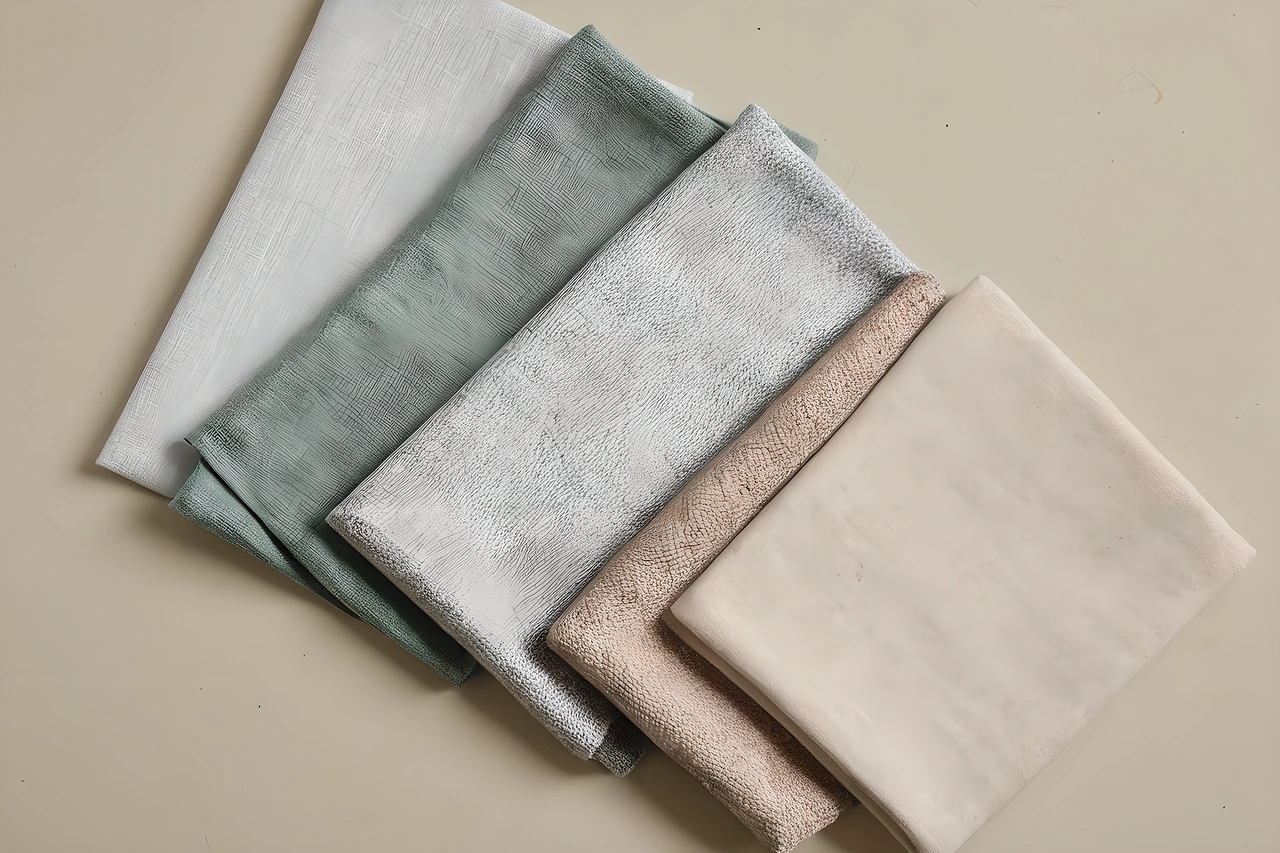
Cleaning behaviour separates fibres more sharply than abrasion does, because a cleaning mistake is instant while abrasion is gradual. Wool, linen, cotton and silk each respond differently to water, heat and agitation, and the difference is not visible in a swatch book at all.
Wool tolerates careful damp cleaning and reacts badly to the combination of heat and mechanical agitation, which is the mechanism behind felting rather than staining. Silk marks readily where water dries in a ring on the surface. Linen and cotton handle water more freely and crease in ways that some households read as a defect and others as character.
Why a removable cover changes the whole calculation
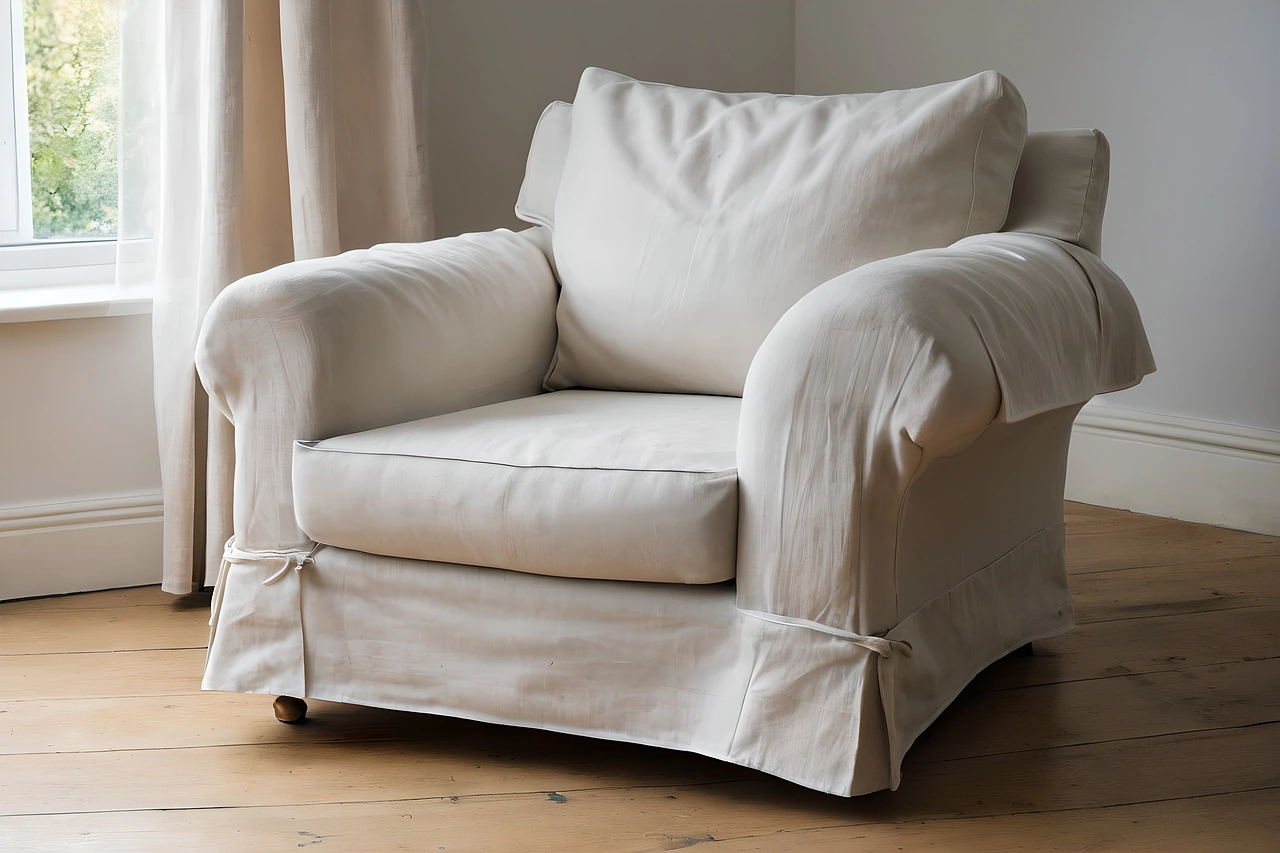
A removable cover shifts the cloth from the maintenance category of a fixed surface into the category of a washable item, and the shift matters more than a few thousand rub cycles. A cover that comes off can be cleaned properly, replaced in one section, or renewed entirely without touching the frame beneath it.
Fitted upholstery has the opposite property. Cleaning happens in place, damage is repaired in place by a specialist, and a worn front edge means either a visible patch or a full recover of the piece, which is why the same cloth suits a loose cover better than it suits fixed upholstery on a heavily used seat.
What to ask a supplier before the cloth is cut
Four questions turn a swatch conversation into a specification, and each of the four has an answer that can be written on an order. A supplier who cannot answer one of them is telling you something about the cloth, which is useful in itself before any money moves.
- The abrasion figure with the part of the standard used to obtain it.
- Fibre composition as percentages, not a descriptive fabric name.
- Cleaning method for the finished cloth, including whether water is acceptable.
- Whether the cloth is available as a loose cover and whether extra metres from the same batch can be held.
The last question protects the room years later. A batch held with the order allows one worn section to be replaced in the original colour, while a match ordered two years later arrives from a different dye lot and reads as a repair from across the room.