28 July 2026
Reviewed 2 August 2026
How do you clean wool upholstery without felting the fibre?
Wool upholstery outlasts cotton and linen covers in daily use, then felts in twenty minutes under water above 30 degrees Celsius and a stiff brush. Vacuum frequency, pill removal, moisture limits and Martindale grade decide whether a wool sofa reaches fifteen years.
Why does wool upholstery resist abrasion better than cotton upholstery?
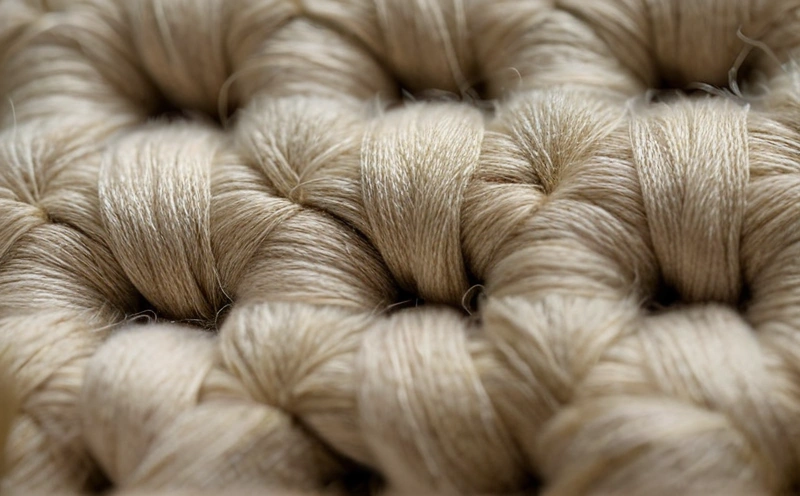
Wool upholstery resists abrasion because each merino fibre carries a permanent crimp that survives roughly 20,000 bend cycles before fracture, against about 3,000 cycles for cotton. Overlapping cuticle scales hold dry soil on the surface of the cloth, and wool absorbs up to 30 percent of its dry weight as water vapour without feeling damp.
The crimp works as a mechanical spring, which is why a wool seat cushion recovers its shape overnight and why a wear patch on the front edge of a wool sofa appears over years rather than months. Cotton fibre has no crimp of comparable amplitude, so a cotton cover flattens at the seat within the first two years of daily use.
Wool also refuses to carry a flame easily. The limiting oxygen index of wool sits near 25 percent, above the 21 percent oxygen content of ordinary air, so wool upholstery self extinguishes where polypropylene at a limiting oxygen index near 18 percent keeps burning. Fire performance is a reason wool dominates contract seating specifications, not a reason to skip a fire retardant interliner.
How often should wool upholstery be vacuumed, and with which nozzle?
Wool upholstery in daily use needs vacuuming once every 7 days with a smooth upholstery nozzle at roughly half suction, allowing about 4 minutes per seat. A guest room chair in wool needs the same nozzle once every 30 days. A rotating beater bar pulls fibre ends out of woollen spun yarn and starts pilling.
Grit does the damage, not dust. Sand and fine mineral particles fall through the pile, settle at the base of the yarn, and cut the fibre under every sitting load. Silica sand measures 7 on the Mohs scale against roughly 2.5 for a wool fibre surface, which is why abrasive soil left in a cushion shortens cover life far faster than surface dust.
Work the nozzle in overlapping strokes in two directions, and lift the cushions to reach the deck underneath at every second session. Reduce suction to about half on loose covers so the cloth is not drawn into the nozzle and stretched at the seams.
Why does new wool upholstery pill for the first six months?
New wool upholstery pills because short fibre ends migrate to the cloth surface, tangle, and stay anchored by a few fibres. Pilling on woollen spun wool peaks between week 8 and week 12, then falls away by about month 6 once the loose short fibre has gone. Worsted wool, combed before spinning, pills far less.
Woollen spun yarn is carded but not combed, so fibres of mixed length lie in every direction and the short ones work loose. Worsted yarn is combed to remove fibre under roughly 60 millimetres and twisted harder, which leaves fewer free ends at the surface and produces a flatter, harder handle.
Remove pills from wool upholstery with a battery fabric shaver held flat, moving in one direction, 2 or 3 passes per panel. Pulling pills off by hand drags the anchor fibres out of the weave and thins the cloth locally. A sticky roller lifts lint but leaves the pills in place, so the shaver is the tool worth owning. Shave the seat and the front edge, then vacuum the loose balls away.
What water temperature and pH keep wool upholstery from felting?
Wool upholstery felts when water, heat and mechanical agitation act together, so cleaning water stays below 30 degrees Celsius and the solution stays between pH 4.5 and pH 8.0. Wet wool fibre swells about 16 percent in diameter, the cuticle scales lift, and rubbing locks the raised scales into neighbouring fibres permanently.
Felting cannot be undone. A felted patch on a wool cover turns hard, contracts by a visible amount, and reads slightly darker than the cloth around it, and no brushing releases the interlocked scales. Alkaline degreasers above pH 9 dissolve the cuticle layer outright and leave the cloth harsh to the hand, which is the usual result of a kitchen spray used on a sofa arm.
Keep the moisture light enough that the panel dries within 2 hours with a fan running and the room held at 20 to 24 degrees Celsius. Soaking a cushion drives soil down into the foam, and the soil wicks back up as the foam dries, which produces the brown ring people mistake for a second stain.
For a fresh spill on wool, blot with a white cotton cloth, work from the outside of the mark toward the centre, and move to a clean part of the cloth every few presses. An outside to centre blotting sequence also suits fresh spills on pale linen, where flax tolerates five solvents that wool cannot take.
Which Martindale grade should a wool sofa in a family room carry?
A wool sofa in a family room needs a cover rated at least 25,000 Martindale rubs under BS EN ISO 12947, the heavy domestic band. The Martindale test counts abrasion cycles against a worsted abradant until two yarns break. General domestic wool at 15,000 to 25,000 rubs suits a bedroom chair, not a daily sofa.
| Martindale rub count | Trade band | Suits | Typical wool cover weight | Blue wool light fastness usually specified |
|---|---|---|---|---|
| 10,000 to 15,000 | Light domestic | Occasional chair, headboard, footstool | 300 to 400 g per square metre | 4 |
| 15,000 to 25,000 | General domestic | Bedroom chair, formal sitting room sofa | 350 to 480 g per square metre | 4 to 5 |
| 25,000 to 30,000 | Heavy domestic | Family sofa in daily use, dining chair | 400 to 550 g per square metre | 5 |
| 30,000 to 40,000 | General contract | Hotel lounge and restaurant seating | 450 to 600 g per square metre | 5 to 6 |
| 40,000 and above | Severe contract | Airport, bar and waiting room seating | 500 to 700 g per square metre | 6 |
The five band names in the table follow BS 2543, the British specification for upholstery fabric performance, and most European wool mills print the matching Martindale figure on the sample tag. Martindale rub counts predict yarn breakage, not appearance. A dark wool cloth rated at 40,000 rubs can still look tired at 20,000 because pilling and surface flattening arrive long before a yarn parts. Ask the supplier for the pilling result on the same cloth, reported as a grade from 1 to 5 under BS EN ISO 12945, where grade 4 or 5 means little surface change after the test cycles.
Light fastness matters on any wool cover facing a window. The blue wool scale of BS EN ISO 105-B02 runs 1 to 8, and each step up roughly doubles the exposure needed to produce the same visible fade, so a wool cloth at blue wool 6 tolerates roughly four times the sunlight of a cloth at blue wool 4 before the colour shifts.
When is a professional wool upholstery clean the better option?
Call a professional for wool upholstery once soil covers a whole panel, once a home attempt has left a drying ring, once odour has reached the foam, or once the piece has run more than 3 years with no clean. Low moisture systems apply 100 to 200 millilitres per square metre.
| Cleaning method | Solution applied per square metre | Solution temperature at the tool | Dry time at 22 degrees Celsius | Felting risk on wool |
|---|---|---|---|---|
| Dry absorbent compound | 0 to 20 ml | Ambient | 20 to 40 minutes | Negligible, no free water reaches the fibre |
| Encapsulation with a polymer detergent | 100 to 150 ml | Below 30 C | 1 hour | Low at pH 4.5 to 8.0 |
| Low moisture extraction | 150 to 250 ml | Below 30 C | 1 to 2 hours | Low with a trained operator and a wool safe detergent |
| Hot water extraction | 400 to 700 ml | Held below 50 C for wool | 4 to 8 hours | High above 50 C or with aggressive brush agitation |
Request a colour fastness test on a hidden seam before any wet method starts: press a damp white cotton cloth against the wool for 30 seconds and check the cloth for dye transfer. A three seat wool sofa takes a cleaner 45 to 90 minutes, so book the appointment for a morning and the piece dries before evening use.
Wool behaves the same way in a rug as in a seat cover, so the 30 degree Celsius and pH 4.5 to 8.0 limits carry straight across to the note on wool rug pile direction and dents.